
Grip Strength: Why It's Such a Powerful Predictor
Grip strength is linked to frailty, falls, heart disease, dementia and survival. Why it deserves a place in routine care alongside blood pressure, and what the research shows.
Across thousands of studies and millions of participants, grip strength has emerged as one of the most powerful simple predictors of how well and how long we live.
Yet outside research settings and specialist clinics, almost no one measures it. At Able Care, we want to change that.
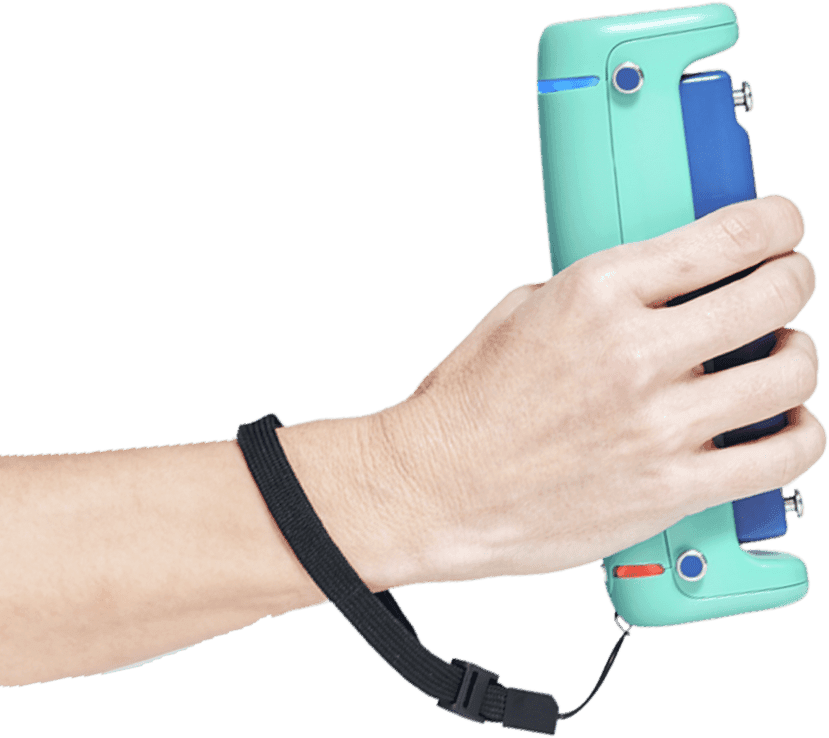
Able Assess, our functional health screening tool, offers one of the most sensitive, accurate and robust grip strength measurement tools on the market (Mace et al., Journal of Rehabilitation and Assistive Technologies Engineering, 2022). It captures a precise, repeatable reading in seconds, so care teams can track small changes over time and compare results fairly across an entire population.
Why everyone should have their grip strength checked
We believe grip strength should be measured regularly, the same way we check blood pressure. In one landmark study of nearly 140,000 adults across 17 countries, grip strength predicted death from any cause more strongly than systolic blood pressure did (Leong et al., The Lancet, 2015). Three things make it an ideal routine measure:
- It's quick and non-invasive. A test takes seconds, needs no needles, no lab and no undressing, and fits into any routine visit or wellness check.
- It works for almost everyone. Squeezing a handle is a simple, familiar action. People with cognitive impairment, limited mobility or low stamina can usually complete it, including those who can't safely stand or walk for other tests.
- It gives a deep view of overall health. One number reflects muscle, nerve function, nutrition and physical reserve. Tracked over time, it can flag decline early, before it shows up as a fall, a hospital stay or a loss of independence.
Why one measure relates to so many conditions
Grip strength isn't really about your hands. It's a window into several body systems at once:
- Muscle health. Skeletal muscle is one of the body's largest tissues. Hand strength tracks closely with strength throughout the body, so a weak grip usually means weaker legs and core too.
- Metabolism. Muscle is where the body stores and burns much of its blood sugar. Less muscle and strength means poorer blood sugar control and a higher cardiometabolic burden.
- The nervous system. A strong grip needs healthy brain signals, nerves and coordination. Changes in grip can reflect changes in brain and nerve health.
- Nutrition and inflammation. Poor nutrition, chronic inflammation and serious illness all break down muscle. Grip often drops early, when these processes begin.
- Physical reserve. Strength is a buffer. People with more of it cope better with illness, surgery and injury, and recover faster.
Because grip strength reflects this shared foundation, it is linked to many conditions at once. It doesn't point to one specific disease. Instead, it signals overall vitality and risk, which is exactly what makes it valuable as a regular screening measure.
What grip strength is linked to
Below is a high-level summary of the conditions and outcomes where research links grip strength to health. For some conditions, grip strength is part of how the condition is defined. For others, it predicts future risk.
Sarcopenia
Sarcopenia is the age-related loss of muscle strength and mass. The European consensus definition uses low grip strength as the first sign to look for: under 27 kg for men and under 16 kg for women (Cruz-Jentoft et al., Age and Ageing, 2019).
Frailty
Weak grip is one of five criteria in the most widely used definition of frailty, the Fried frailty phenotype. The others are weight loss, exhaustion, slow walking and low activity (Fried et al., The Journals of Gerontology, 2001).
Malnutrition
Muscle function responds to poor nutrition faster than muscle mass does, so grip strength is an early marker of nutritional status. Low grip also predicts complications and longer hospital stays (Norman et al., Clinical Nutrition, 2011).
Mortality and heart health
This is where the evidence is strongest. In the 17-country PURE study, lower grip strength predicted death from any cause and from cardiovascular disease, as well as heart attack and stroke (Leong et al., The Lancet, 2015). In half a million UK Biobank participants, each 5 kg drop in grip meant about 16% (men) to 20% (women) higher risk of death (Celis-Morales et al., BMJ, 2018).
Falls and fractures
Muscle weakness is one of the most consistent risk factors for falls in older adults, and weak grip is part of that picture (Moreland et al., 2004). A meta-analysis of 19 cohort studies found that lower grip strength predicts future fractures in the general population (Kunutsor et al., GeroScience, 2020).
Disability and loss of independence
Grip strength in midlife predicts disability decades later. In a 25-year study, men with the weakest grip were more than twice as likely to need help with self-care in old age (Rantanen et al., JAMA, 1999).
Type 2 diabetes and metabolic health
People with stronger grip have a lower risk of developing type 2 diabetes. Adding grip strength to standard risk factors improved diabetes prediction in a long-term cohort study (Kunutsor et al., Annals of Medicine, 2020). Low grip is also linked to worse outcomes when people have several cardiometabolic conditions at once (Lu et al., BMC Medicine, 2022).
Dementia and cognitive decline
Among UK Biobank adults, lower grip strength was linked to a higher risk of developing dementia and dying from it (Esteban-Cornejo et al., Journal of Cachexia, Sarcopenia and Muscle, 2022). A recent meta-analysis found that weaker grip predicts later cognitive decline in older adults (Younis et al., Neuroscience & Biobehavioral Reviews, 2026).
Depression
A 2026 meta-analysis of 12 cohorts and nearly 500,000 people found that lower grip strength was linked to a 26% higher risk of developing depression (Oliveira et al., Journal of Psychiatric Research, 2026). The authors note the effect is modest for any one person, but meaningful across populations.
Lung disease
In UK Biobank, lower grip was linked to higher risk of death from respiratory disease and COPD. Each 5 kg drop in grip raised the risk of death from respiratory disease by 24% in men and 31% in women (Celis-Morales et al., BMJ, 2018).
Cancer
In older adults already living with cancer, stronger grip is linked to longer survival: a meta-analysis of 25 studies found a 39% lower risk of death (Ezzatvar et al., Journals of Gerontology: Series A, 2021). In people already living with cancer, weak grip flags muscle wasting and predicts poorer survival (López-Bueno et al., Age and Ageing, 2022).
Kidney disease
In people with chronic kidney disease, including those on dialysis, lower grip strength consistently predicts higher mortality (Zhang et al., International Urology and Nephrology, 2023; Chen et al., Renal Failure, 2024).
Liver disease
In cirrhosis, grip strength predicts survival and adds prognostic value beyond the standard MELD liver score (Sinclair et al., Liver Transplantation, 2019). Researchers have now proposed grip cut-offs specific to cirrhosis patients (Santos et al., European Journal of Clinical Nutrition, 2025).
Hospital stays and surgery
People with weak grip before surgery have more complications, longer stays and higher mortality afterward (Sultan et al., BMC Anesthesiology, 2012). Grip strength at hospital admission also predicts how long patients take to go home (Mendes et al., Journal of Parenteral and Enteral Nutrition, 2013).
Health from adolescence onward
The link starts early. In a study of over one million Swedish adolescent men, those with lower muscle strength had a higher risk of premature death decades later (Ortega et al., BMJ, 2012).
Conditions affecting the hands, nerves and brain
For rheumatoid arthritis, hand osteoarthritis, carpal tunnel syndrome, stroke, Parkinson's disease, multiple sclerosis and peripheral neuropathy, grip strength is a direct measure of how the condition affects everyday function. It's widely used to track change and recovery during rehabilitation (Bohannon, Clinical Interventions in Aging, 2019).
A simple number with a big story
Grip strength doesn't diagnose any single disease. It's a screening signal: a fast, objective reading of overall vitality that shows who may need a closer look, and whether someone is getting stronger or declining over time.
That's why it belongs in routine care, alongside blood pressure. With Able Assess, care teams can capture a precise grip strength reading in seconds, together with gait speed, balance and lower-limb strength, and track it across every person they support.
Want to bring regular grip strength screening to your organization? Get in touch with the Able Care team.
Want to learn more about grip strength?
See our library of research summaries into grip strength as a biomarker here
Learn about what makes a good hand dynamometer, and the research behind our GripAble sensor here