
Head-to-head comparison
SafelyYou uses AI-powered cameras to detect falls in real time and alert care staff. It is a response tool: it shortens the time a resident spends on the floor after a fall. Able Assess sits upstream. It screens every resident with four objective, sensor-based metrics, stratifies risk before a fall occurs, and gives the care team a data-backed plan to prevent it. Both tools have a place, but they solve different problems.
Feature
Able Assess
SafelyYou
Category
Falls prevention (upstream screening and risk stratification)
Fall detection (post-fall alerting and video review)
When it acts
Before the fall, identifying at-risk residents through objective screening
After the fall, detecting the event and alerting staff
Primary output
Risk banding with four objective metrics, routed to the care plan
Real-time fall alert with video footage for incident review
Measurement method
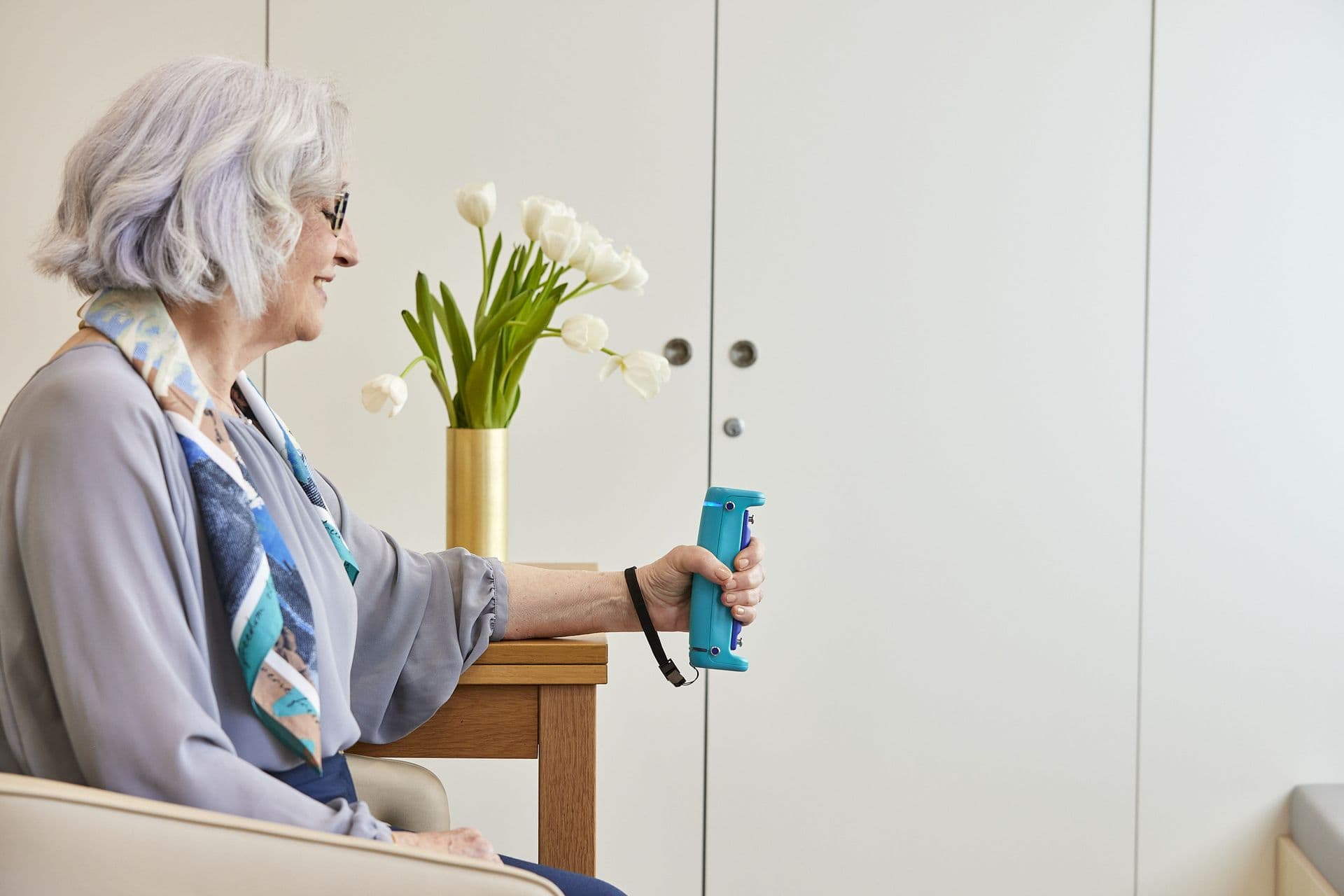
Sensor-based functional health metrics: grip strength, sit-to-stand, gait speed, timed up-and-go
AI-powered camera monitoring of resident movement
Privacy model
No cameras, no continuous monitoring. Screening is an active, scheduled interaction
Continuous camera monitoring in resident rooms and common areas
Staff workflow
Any staff member runs a five-minute screening, no clinical certification required
Staff respond to automated alerts when a fall is detected
Infrastructure
GripAble sensor and tablet or smartphone, no installation required
Camera hardware installed in rooms and common areas, network infrastructure
Care plan impact
Objective data drives proactive care planning and intervention before a fall
Post-fall video informs root-cause analysis and reactive care adjustments
Why upstream screening matters
Objective screening has been shown to reduce falls by 25%.
— Able Care 2026 Commercialization Strategy
Published Studies
Multifactorial falls risk screening outperforms single-test paper approaches in predicting falls in older adults
· BMJ, 2018
Proactive screening and intervention reduces fall incidence more effectively than reactive detection alone
· [TODO: source needed]
NICE 2025 guidelines recommend standardized, objective falls risk screening as a primary prevention measure
· NICE, 2025