
Fall Prevention for Older Adults at Home: A Report on the Evidence Base
What causes falls at home, and which interventions have been shown to prevent them. A review of the research on exercise, home modification, medication review and more, with the strength of the evidence behind each.
Able Assess provides a fast, objective way to measure the functional factors behind an individual's risk of falling. Assessment alone, however, does not prevent falls. Identifying risk is useful only when it is paired with interventions that have been shown to work.
Users of Able Assess regularly ask for resources on how best to suggest interventions to the seniors in their care. Able Care does not prescribe specific interventions for individual seniors. We do encourage every senior at risk of falling, and everyone who supports them, to seek out approaches backed by a strong evidence base.
This report compiles that evidence. It summarizes the research on the most common causes of falls at home, and on the interventions demonstrated to be most effective at preventing them.
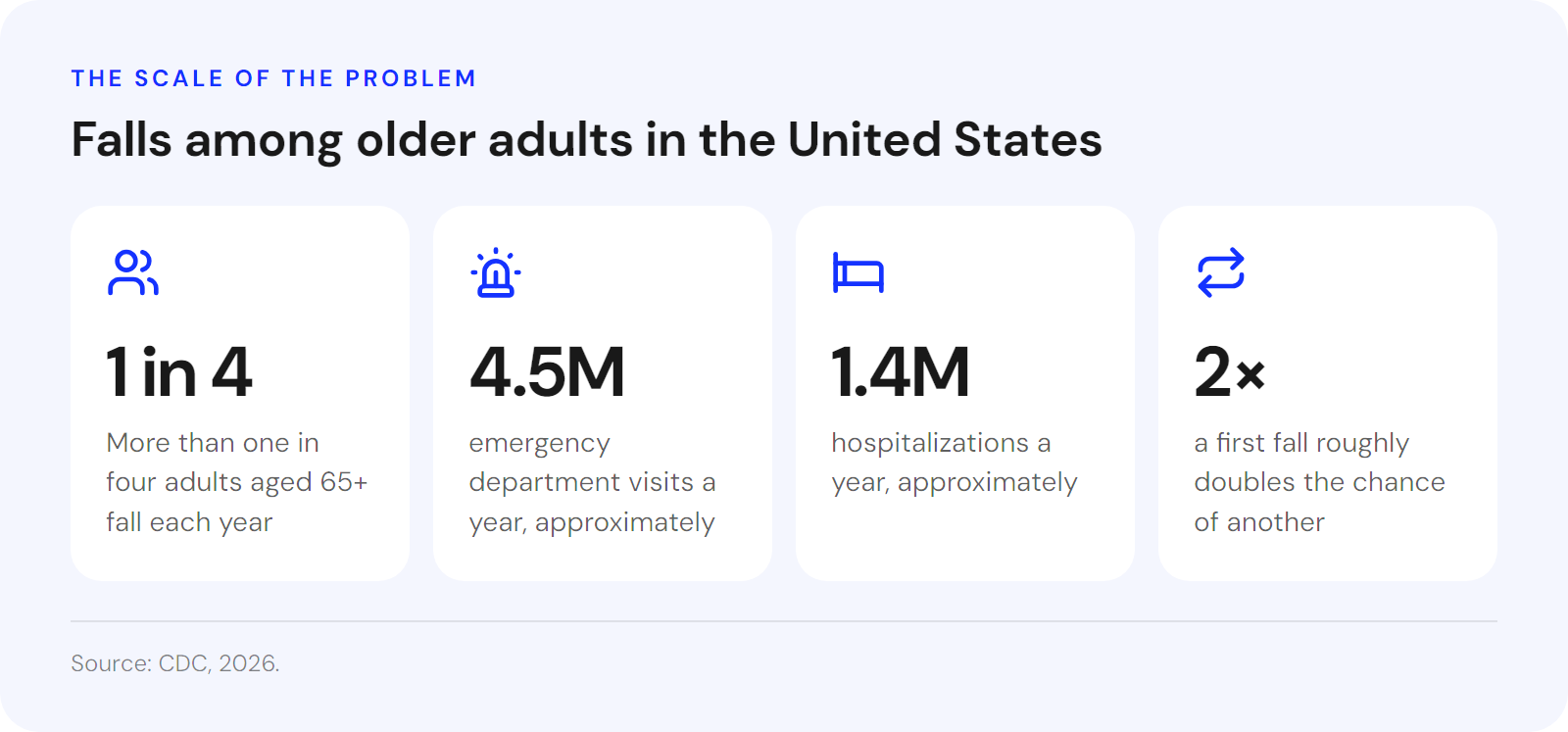
The scale of the problem is well established. More than one in four adults aged 65 and older falls each year, producing approximately 4.5 million emergency department visits and 1.4 million hospitalizations annually in the United States (CDC, 2026). A first fall approximately doubles the probability of a subsequent fall.
The literature addressing that burden is large but uneven in quality. Some measures are supported by high-certainty evidence from dozens of randomized trials; others are widely promoted on the basis of plausibility alone; several widely recommended measures have been tested and found ineffective. This review therefore summarizes the type of evidence behind each intervention. You'll find it in the italic notes marked with a blue line, like this one.
Evidence: A short summary of the type and strength of evidence behind the finding above it.
Part I: What Activities Lead to Falls?
Falls occur during routine activity
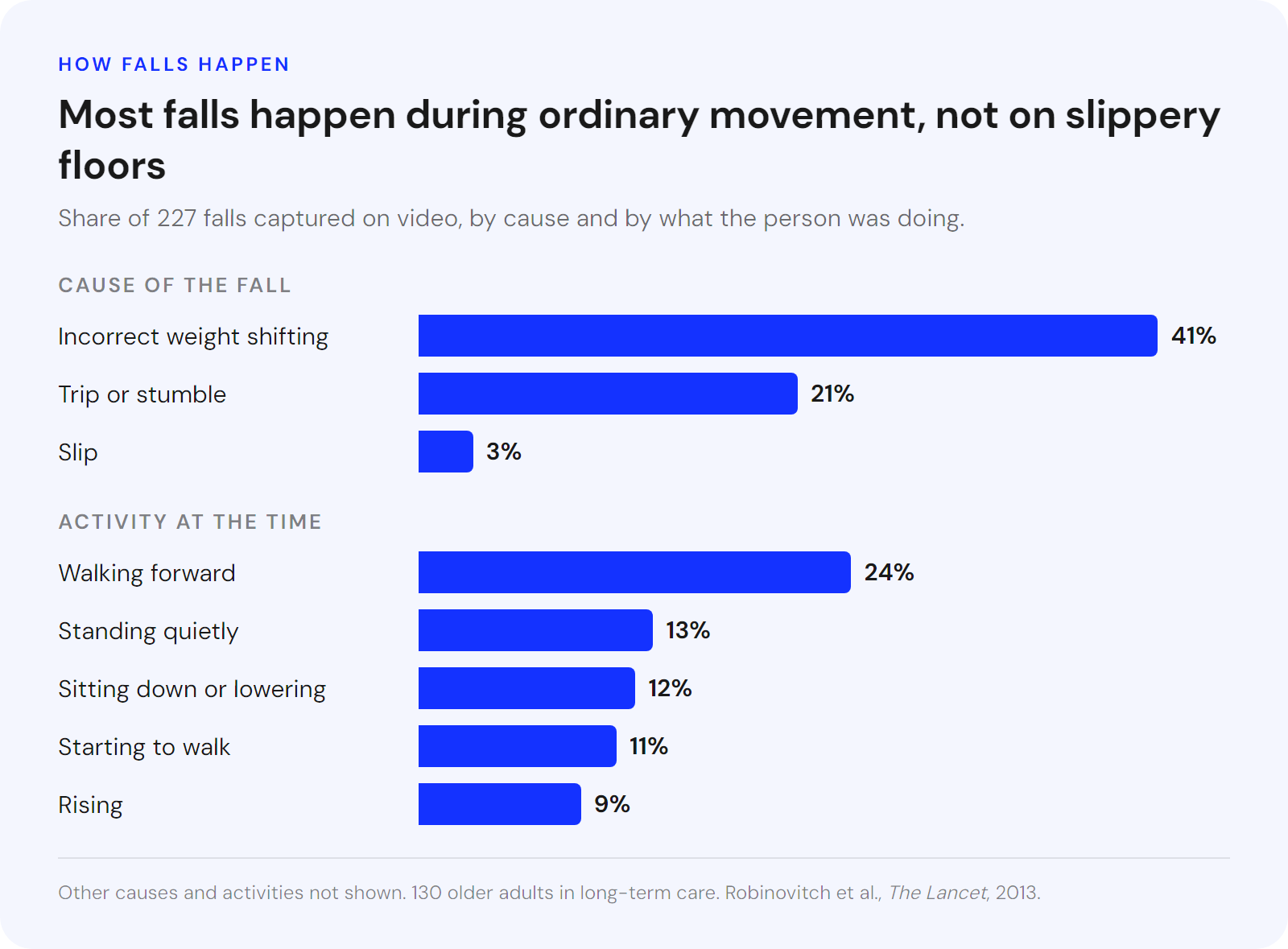
The most granular evidence on fall mechanism derives from a study in The Lancet that captured 227 falls on video across 130 older adults (Robinovitch et al., The Lancet, 2013). Slipping accounted for only 3% of falls. The predominant cause was incorrect weight shifting (41%), followed by trips or stumbles (21%).
The activities in progress were unremarkable: forward walking (24%), standing quietly (13%), sitting down or lowering (12%), initiating walking (11%), and rising (9%). The study was conducted in long-term care, limiting direct generalization, but the biomechanical finding is setting-independent: falls concentrate at moments of postural transition within ordinary tasks.
Risk concentrates in identifiable activities of daily living
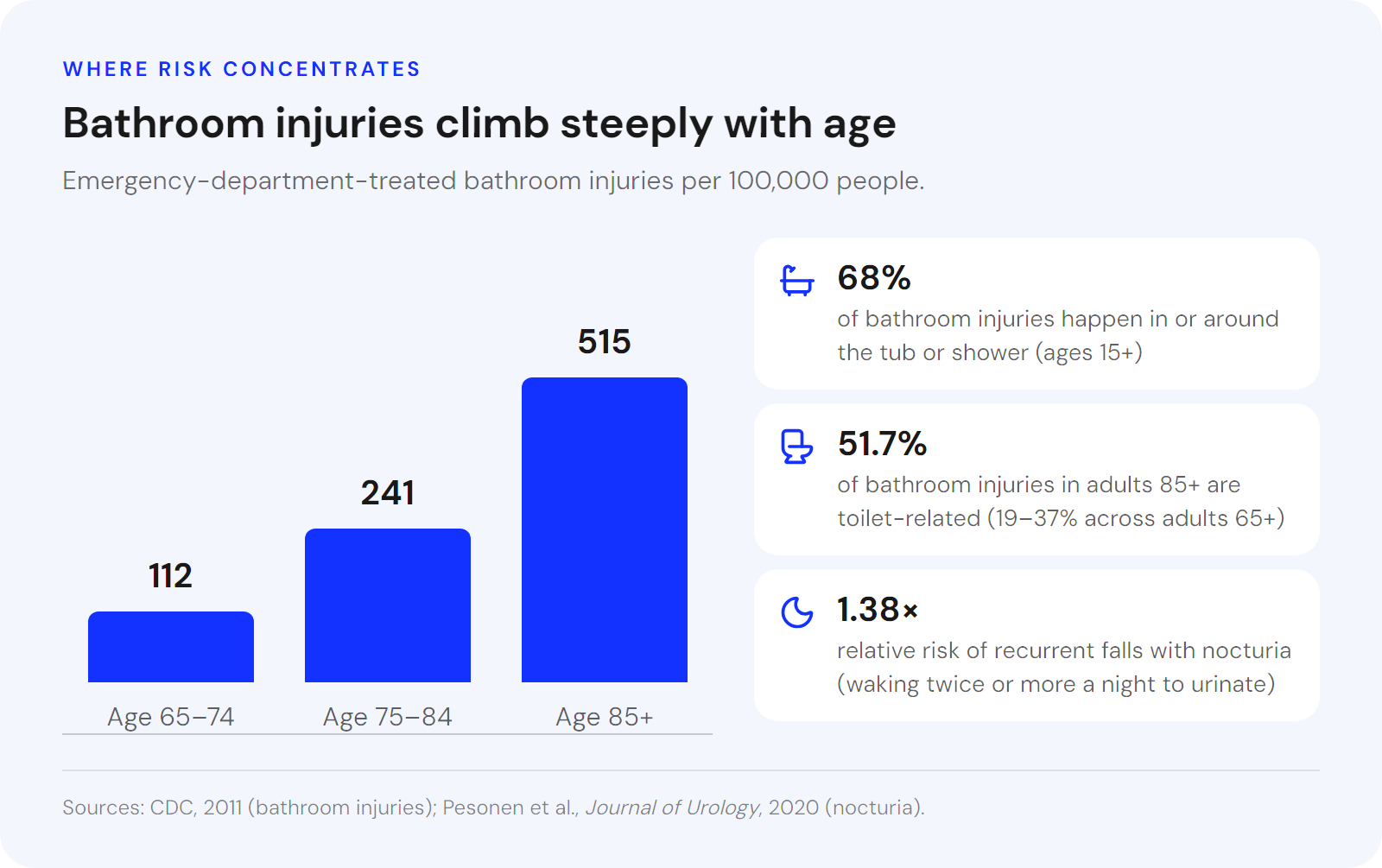
Bathing and showering. CDC surveillance of nonfatal bathroom injuries (CDC, 2011) documented 234,000 emergency-department-treated injuries among persons aged 15 and older in a single year. Rates rise steeply with age: 112 per 100,000 at ages 65–74, 241 at 75–84, and 515 at 85 and older. Across that full age range, approximately 68% occurred in or around the tub or shower and 23% near the toilet, proportions that shift markedly with age, as below.
Toileting, particularly at night. Toilet-related injuries constituted 19–37% of bathroom injuries among adults 65 and older, but 51.7% among those aged 85 and older. Nocturia (two or more voiding episodes per night) is associated with a relative risk of 1.20 (95% CI 1.05–1.37) for any fall and 1.38 (95% CI 1.11–1.71) for recurrent falls (Pesonen et al., Journal of Urology, 2020).
Transfers. Sitting or lowering accounts for 12% of falls and rising for 9%; transfers are moments of postural transition, where incorrect weight shifting (the most common cause overall) is especially likely (Robinovitch et al., The Lancet, 2013).
Ambulation and stair negotiation. Forward walking is the single most common activity at the time of a fall (Robinovitch et al., The Lancet, 2013). In a prospective community-dwelling sample of 96 adults aged 60–88, trips and slips accounted for 59% of 91 recorded falls (Berg et al., Age and Ageing, 1997).
Dressing. Lower-body dressing is a single-limb balance task performed under divided attention (Lin et al., AGE, 2011). It is poorly captured in surveillance data, which code by location rather than activity, and is commonly raised in occupational therapy practice.
Part II: Fall Prevention Interventions
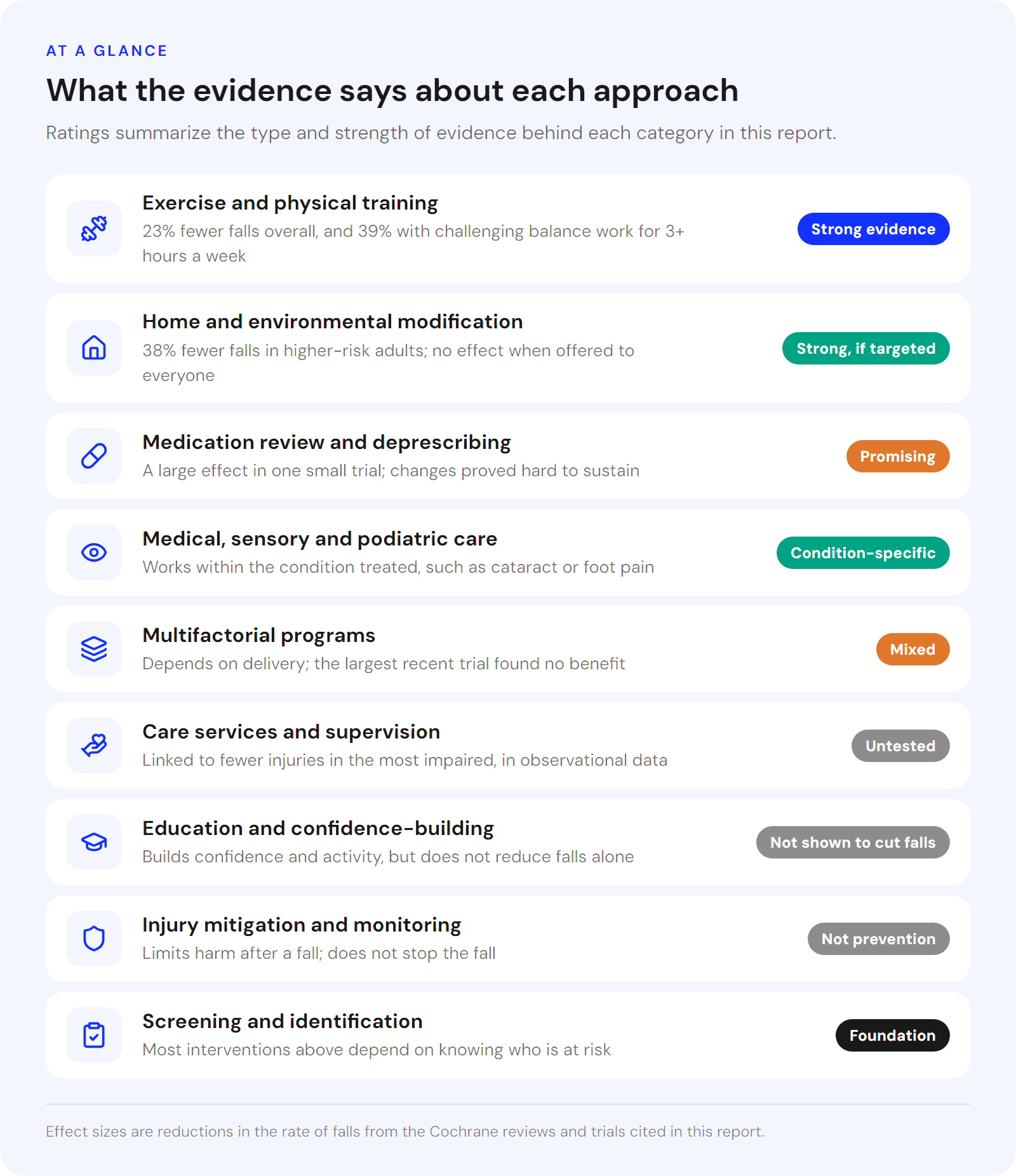
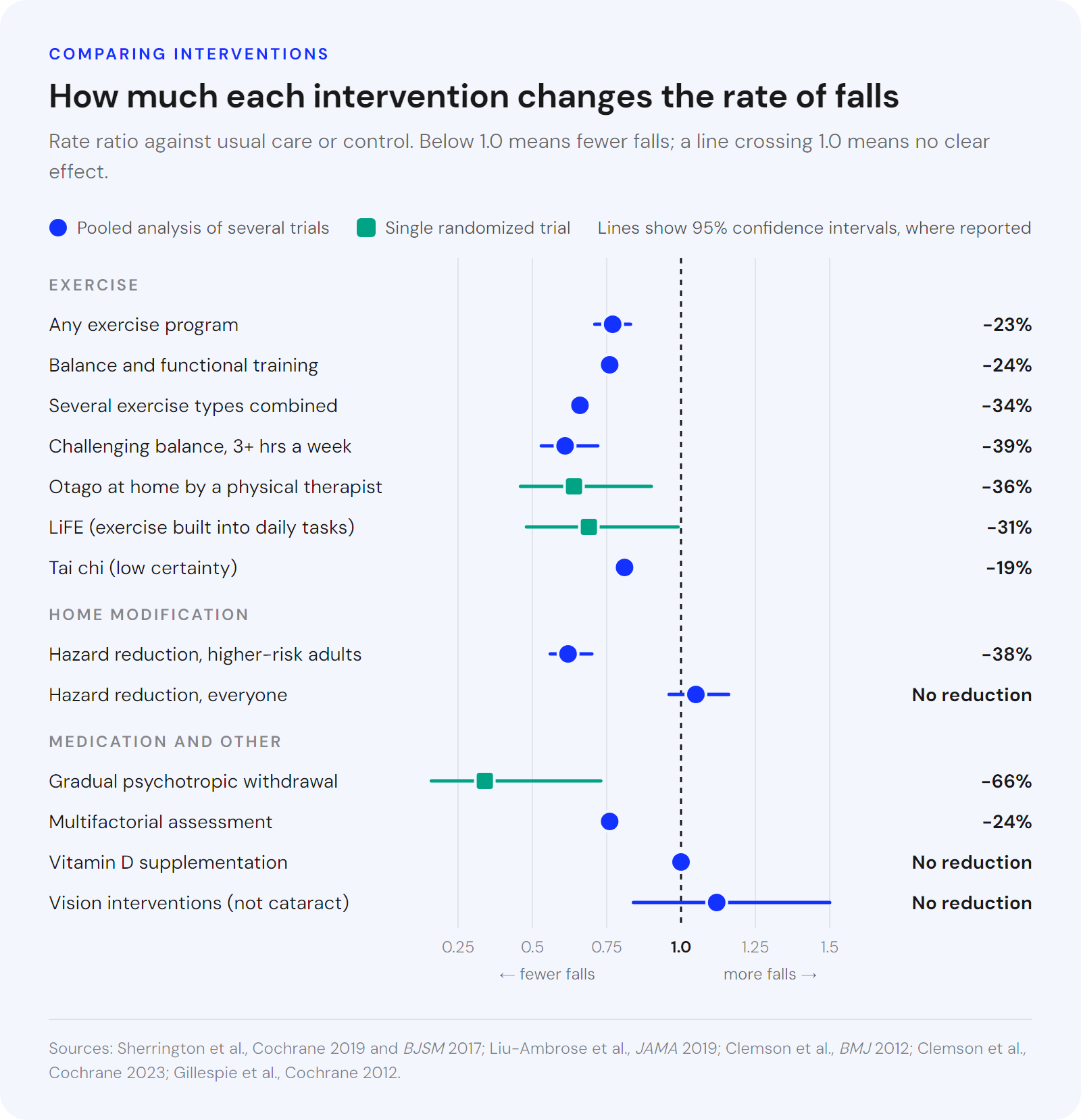
The chart below compares the headline effect of each intervention discussed in this section. Each part then explains what sits behind the number.
II.I: Exercise and Physical Training

The evidence base for exercise and physical training is the strongest in the field. High-certainty evidence from 59 randomized trials, and the only falls intervention the USPSTF grades B (for community-dwelling adults 65 and older at increased risk). The open questions concern dose and delivery, not whether it works.
Balance and functional training
A Cochrane review of 59 trials found exercise reduced the rate of falls by 23% (RaR 0.77, 95% CI 0.71–0.83) on high-certainty evidence (Sherrington et al., Cochrane Database of Systematic Reviews, 2019). Balance and functional training reduced the rate of falls by 24%; programs combining multiple exercise types (usually balance plus resistance), by 34%. In 2024 the USPSTF assigned exercise interventions a Grade B recommendation (USPSTF, 2024) for adults 65 and older at increased risk.
Evidence: High certainty, 12,981 participants, consistent across trials.
Dose and program design
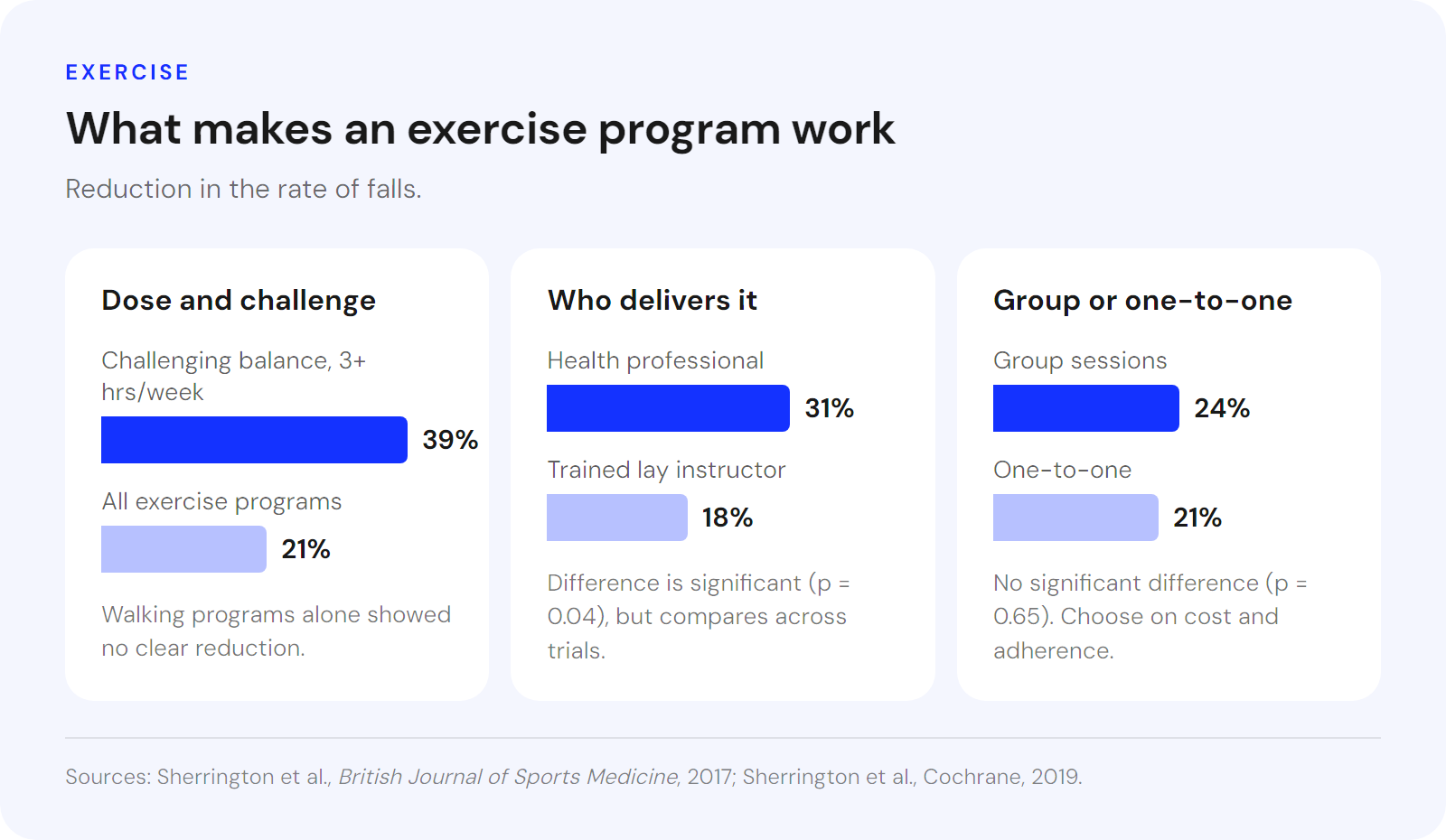
Pooled across all exercise programs the effect was 21%. Programs that both highly challenged balance and delivered more than three hours per week achieved a 39% reduction (IRR 0.61, 95% CI 0.53–0.72) (Sherrington et al., British Journal of Sports Medicine, 2017), and those two characteristics jointly explained 76% of between-trial heterogeneity.
The same analysis found walking programs alone showed no clear fall reduction (brisk walking was explicitly discouraged for high-risk individuals), and resistance training alone had an uncertain independent effect.
Evidence: Meta-regression across 88 trials; explains three-quarters of the variation between studies.
Physical-therapist delivery
A trial in JAMA enrolled 344 adults aged 70 and older who had sustained a fall requiring medical attention. A physical therapist delivered the Otago Exercise Program at home; both arms received standard geriatric falls-prevention care. The intervention arm experienced 36% fewer subsequent falls (Liu-Ambrose et al., JAMA, 2019) (IRR 0.64, 95% CI 0.46–0.90). Otago (NCOA, n.d.), which combines therapist assessment and prescription, seventeen exercises plus walking, and four visits across eight weeks followed by supported self-management, is associated with reductions of 35–40%, with effects seen in both prior fallers and non-fallers, and particularly in adults aged 80 and over.
Evidence: One 12-month randomized trial in a secondary-prevention population, supported by a wider program literature.
Delivery format versus who delivers
Format appears not to matter. Group-delivered exercise reduced falls 24% (RaR 0.76, 95% CI 0.69–0.85; 40 studies), individually delivered exercise 21% (RaR 0.79, 95% CI 0.71–0.88; 21 studies); the subgroup difference was not significant (p = 0.65). A non-inferiority trial (Albornos-Muñoz et al., BMC Nursing, 2024) randomized 827 adults to Otago in groups of 6–12 or one-to-one and found the formats similar at 6 and 12 months, though one-to-one produced higher adherence.
Who delivers does appear to matter. Programs delivered by health professionals, typically physical therapists, reduced falls 31% (RaR 0.69, 95% CI 0.61–0.79; 25 studies) against 18% for trained non-health-professional instructors (RaR 0.82, 95% CI 0.75–0.90; 34 studies), p = 0.04. Because this compares across trials rather than randomizing participants to providers, it may partly reflect the populations such trials recruit. The defensible reading is that professional assessment and prescription add value, while the setting in which the exercise is then performed is a question of cost, preference and adherence.
Evidence: Subgroup analyses within the Cochrane review, which are indirect comparisons across trials, plus one randomized non-inferiority trial on format alone.
Occupational therapy occupies a different role. OT's strongest trial support lies in home hazard assessment and ADL retraining, covered in Part II.II. One exception is the Lifestyle-integrated Functional Exercise (LiFE) program, which builds balance and strength exercises into everyday tasks. In a randomized trial of 317 adults aged 70 and older with prior falls, delivered by physiotherapists and occupational therapists, LiFE reduced the rate of falls by 31% (IRR 0.69, 95% CI 0.48–0.99) (Clemson et al., BMJ, 2012).
Tai chi
Cochrane reported a 19% reduction in the rate of falls (RaR 0.81, low certainty) and a 20% reduction in the number of people who fall (RR 0.80, high certainty). A randomized trial of 670 adults aged 70 and older at elevated risk found therapeutic tai ji quan produced 58% fewer falls than stretching and 31% fewer than multimodal exercise (Li et al., JAMA Internal Medicine, 2018) over six months.
Evidence: Low certainty for the rate of falls, high certainty for the number of people who fall; one large randomized trial in high-risk adults.
Cognitive-motor dual-task training
Cognitive-motor dual-task training has participants perform a physical task and a mental task simultaneously, such as walking while counting backwards, or stepping in a pattern while naming items in a category. The rationale is that falls in daily life rarely occur while a person is concentrating on balance; they occur while attention is elsewhere, so balance is trained under those conditions.
A meta-analysis (Gao & Liu, Geriatric Nursing, 2025) reported improvements in gait, balance and executive function, while noting inconsistent findings on muscle strength and fear of falling and calling for larger, longer trials.
Evidence: Twenty-eight randomized trials, but no pooled falls effect size and inconsistent secondary outcomes. Promising, not established.
II.II: Home and Environmental Modification

Evidence base: high certainty, and the most strongly risk-moderated intervention in this review. The same programs that cut falls 38% in high-risk adults show no clear effect in unselected ones.
Hazard reduction targeted to people at risk
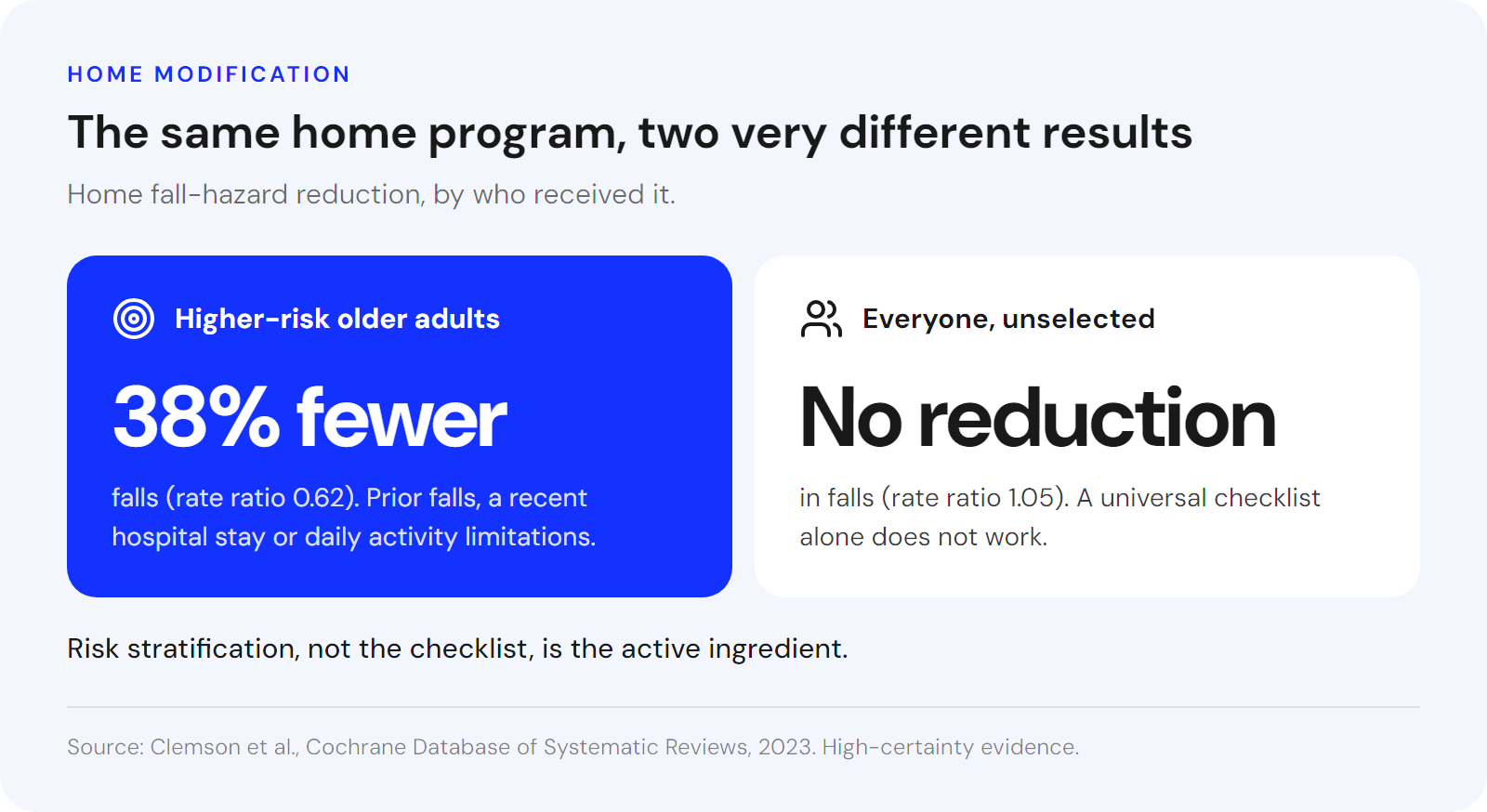
Home fall-hazard reduction reduced the rate of falls by 26% overall (RaR 0.74, 95% CI 0.61–0.91; 12 studies, 5,293 participants) (Clemson et al., Cochrane Database of Systematic Reviews, 2023). Among higher-risk older adults (prior falls, recent hospitalization, or daily activity limitations) the reduction reached 38% (RaR 0.62, 95% CI 0.56–0.70) on high-certainty evidence.
Cumming's randomized trial (Cumming et al., Journal of the American Geriatrics Society, 1999) of occupational therapist home visits (n = 530) found a 36% reduction in the relative risk of at least one fall (RR 0.64, 95% CI 0.50–0.83), confined to participants who had fallen in the preceding year.
The reviewers emphasized that effective programs required substantive assessment and follow-through, typically by an occupational therapist, rather than checklist administration.
Evidence: High certainty from a 2023 Cochrane review, corroborated by an earlier randomized trial.
Specific modifications
Measures within these programs include grab bars at tub, shower and toilet; shower seating and handheld showerheads; raised toilet seats; non-slip surfaces; motion-activated night lighting along the bed-to-bathroom path; bilateral stair handrails and stair lighting; raised bed and chair height with firm cushions and armrests; and removal of loose rugs, cords, clutter and uneven thresholds. Individual devices have generally not been tested in isolation, so the effect sizes above belong to the package, not to any single item.
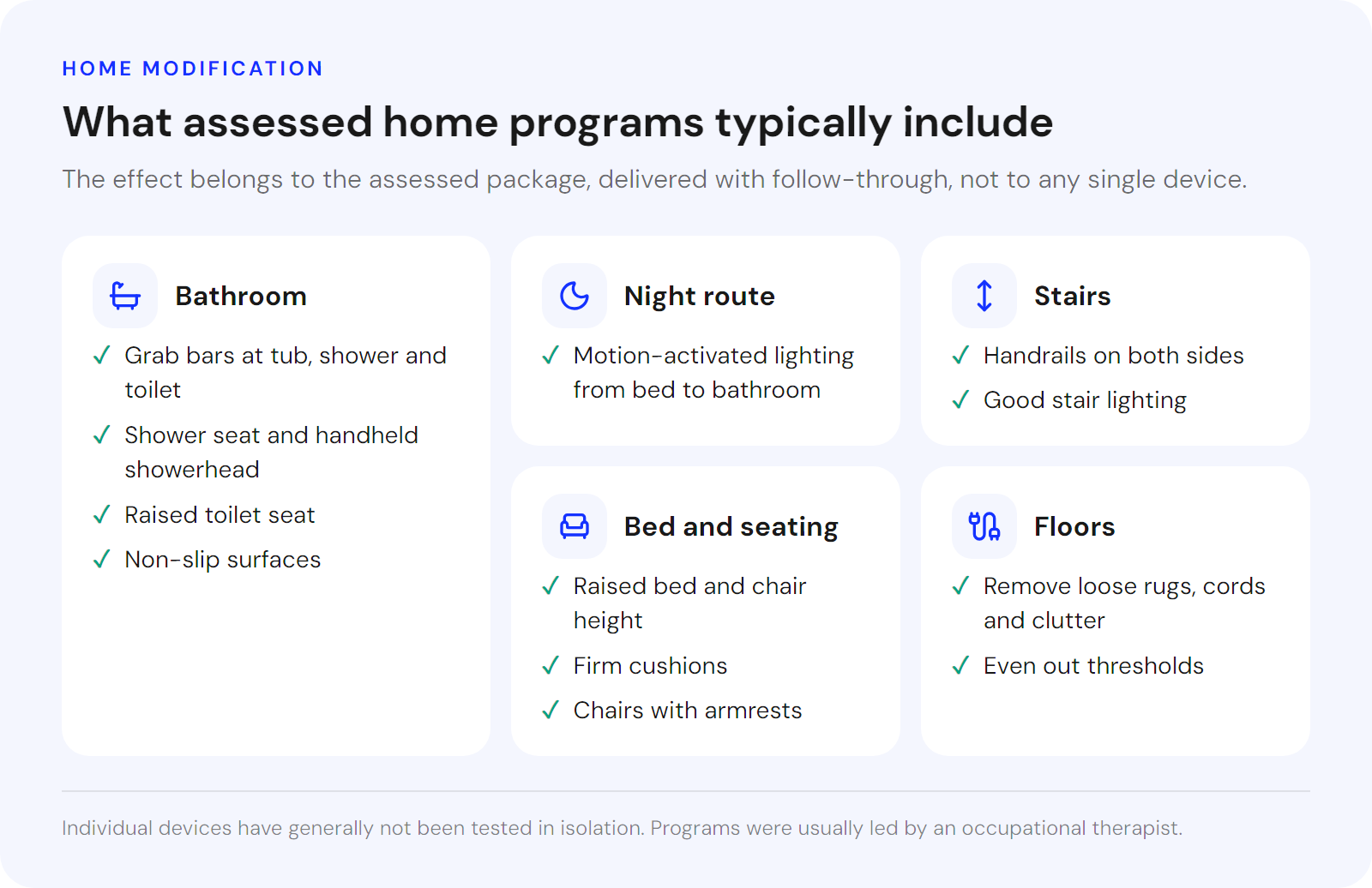
Evidence: Supported as components of assessed programs rather than as individually trialed devices.
Universal home checklists
Home-hazard programs delivered to unselected older adults produced no reduction in falls (RaR 1.05, 95% CI 0.96–1.16). Risk stratification, not the checklist, is the active ingredient.
Evidence: High certainty that they do not work.
II.III: Medication Review and Deprescribing

Evidence base: one striking randomized result and a well-developed consensus tool, on a thinner trial base than exercise or home modification. The mechanism is not in doubt; the delivery model is less well established.
Psychotropic withdrawal
Gradual withdrawal of psychotropic medication reduced the rate of falls by 66% (RaR 0.34, 95% CI 0.16–0.73) in the Cochrane synthesis (Gillespie et al., Cochrane Database of Systematic Reviews, 2012). The estimate rests on a single trial of 93 participants, Campbell et al., Journal of the American Geriatrics Society, 1999, which reduced the rate of falls but not the risk of falling, and in which participants tended to resume their medication after the trial ended. The direction of effect is consistent with the wider observational literature on fall-risk-increasing drugs; the magnitude should be read as indicative rather than definitive.
Evidence: A single randomized trial with one of the largest effect sizes in the falls literature; adherence proved difficult to sustain.
Prescribing modification in primary care
A prescribing-modification program for primary care physicians reduced the risk of falling (RR 0.61, 95% CI 0.41–0.91; 1 trial, 659 participants in the Cochrane analysis). The trial, Pit et al., Medical Journal of Australia, 2007, was a cluster-randomized study in which 20 Australian general practitioners recruited 849 patients aged 65 and older. The intervention combined academic detailing and prescribing feedback with a medication risk assessment and a review checklist targeting benzodiazepines, NSAIDs and thiazide diuretics; participating GPs received financial incentives. At 12 months the adjusted odds of falling were 0.61 (95% CI 0.41–0.91), with fall-related injury at 0.56 (95% CI 0.32–0.96) and injuries requiring medical attention at 0.46 (95% CI 0.30–0.70).
Evidence: A single cluster-randomized trial in general practice, reporting the proportion of people who fall rather than the rate of falls.
STOPPFall
The STOPPFall tool (Seppala et al., Age and Ageing, 2021), developed by a European Geriatric Medicine Society task force, identifies fall-risk-increasing drugs (benzodiazepines, antipsychotics, sedative hypnotics and selected antihypertensives among them) and provides structured deprescribing guidance.
Evidence: Delphi consensus, not a trial. A tool for identifying targets, with no effect size of its own.
Vitamin D supplementation
Cochrane found no effect on the rate of falls (RaR 1.00), with possible benefit confined to those with low baseline levels. The USPSTF has issued a draft Grade D recommendation (USPSTF, 2024) against supplementation with vitamin D, with or without calcium, for primary prevention of falls and fractures in community-dwelling postmenopausal women and men aged 60 and older, excluding those with prior osteoporotic fracture, diagnosed osteoporosis or documented deficiency. The recommendation remained in draft at the time of writing (October 2026).
Evidence: No effect in unselected populations; a draft Grade D recommendation against it.
II.IV: Medical, Sensory and Podiatric Interventions

Evidence base: several well-conducted randomized trials whose results apply only within the specific conditions they treat. None of these benefits the general older population, and none should be offered on a population basis.
Condition-specific interventions
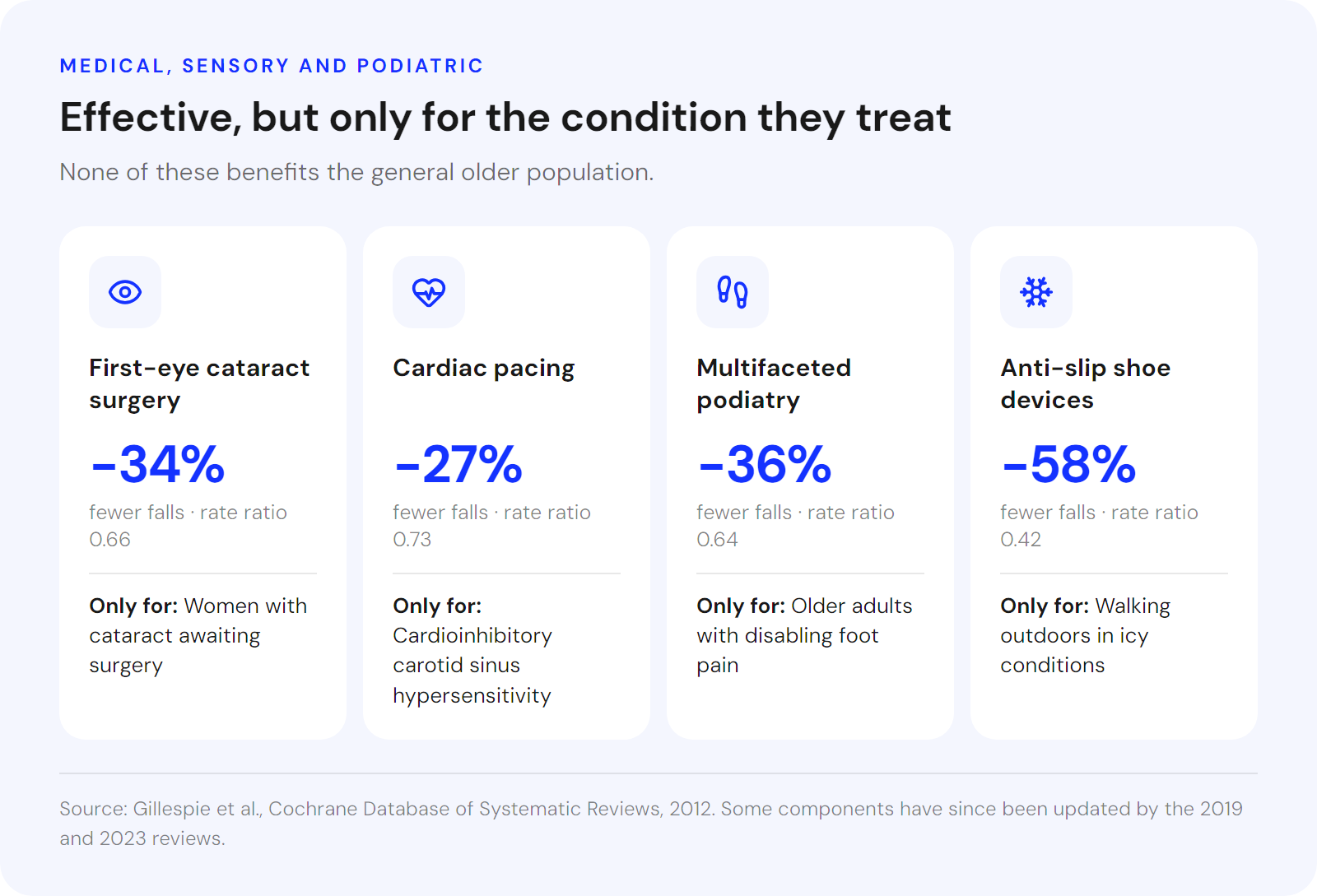
Source: Cochrane 2012 synthesis (Gillespie et al., Cochrane Database of Systematic Reviews, 2012). Several components have since been updated by the 2019 exercise and 2023 environmental reviews.
Evidence: Randomized evidence, pooled in the Cochrane synthesis; each estimate belongs to its indicated population.
Footwear
A study of 1,371 older adults found athletic and canvas shoes (low heel, wide sole, large ground-contact area) associated with the lowest fall risk, and going barefoot or in stocking feet with the highest (Koepsell et al., Journal of the American Geriatrics Society, 2004); other footwear categories, including slippers, carried a modestly higher risk that was not statistically significant. Footwear advice is low cost, although it has not itself been tested as a falls intervention.
Footwear designed to reduce tripping has also been studied. In a survey of 705 customers of variable-friction adaptive footwear (Cadense) who had worn the shoes for at least three months, participants reported 87.1% fewer falls per month than in the 12 months before they started wearing them (Nataletti et al., JMIR Rehabilitation and Assistive Technologies, 2026). The study had no control group, relied on recalled falls, and had a 4.8% response rate among customers identified by the manufacturer, so it shows an association rather than an effect of the shoes; a controlled trial is needed.
Evidence: A large prospective cohort, not a randomized trial: association rather than demonstrated causation. The adaptive-footwear survey is uncontrolled and self-reported.
Orthostatic hypotension
Orthostatic hypotension is associated with falls at an odds ratio of 1.73 (95% CI 1.50–1.99) (Mol et al., Journal of the American Medical Directors Association, 2019) across 49,164 individuals, consistently regardless of population, study design or measurement method. Lying-and-standing blood pressure measurement is a standard component of falls assessment; what follows from a positive finding is managed clinically rather than by a single trialed protocol.
Evidence: A consistent risk-factor association across 50 studies; the intervention evidence is thinner than the association.
Nocturia and continence
Nocturia, generally two or more voiding episodes per night, is associated with a relative risk of 1.20 (95% CI 1.05–1.37) for any fall and 1.38 (95% CI 1.11–1.71) for recurrent falls (Pesonen et al., Journal of Urology, 2020). Given the concentration of injury around nighttime toileting in the oldest cohort, fluid timing, review of diuretic selection and dosing schedule, and continence assessment are reasonable targets, though the risk estimate is better established than any specific intervention against it.
Evidence: Meta-analysis establishing the risk; targeted management is inferred from it rather than directly trialed.
Vision interventions beyond cataract surgery
The 2023 Cochrane review found vision interventions made little or no difference to fall rates (Clemson et al., Cochrane Database of Systematic Reviews, 2023) (RaR 1.12, 95% CI 0.84–1.50). A trial substituting single-lens distance glasses for multifocals (Haran et al., BMJ, 2010) did not reduce falls overall, with apparent benefit limited to participants regularly active outdoors.
Evidence: Pooled analysis shows little or no effect.
II.V: Multifactorial and Combined Programs

Evidence base: mixed, and strongly dependent on implementation. The best-run programs show reductions comparable to single-component interventions, while the largest recent trial of a care-coordination model showed none. This is a category where the average effect conceals more than it reveals.
Stepping On
A seven-week small-group workshop addressing strength and balance exercise, medication review, home modification and vision. The original trial reported a 31% reduction in falls (Clemson et al., Journal of the American Geriatrics Society, 2004). A later uncontrolled Wisconsin rollout with informal leader training (151 participants) found no reduction; a larger later evaluation, after leader training was standardized, reported substantially fewer falls.
On trial evidence alone, Stepping On belongs beside the single-component interventions in Part II.I. It appears here because it bundles several interventions, and because implementation experience suggests its effect depends on faithful delivery in a way that exercise prescription is not.
Evidence: A randomized controlled trial with a 31% reduction, and uncontrolled implementation data suggesting that delivery fidelity matters.
CAPABLE
The CAPABLE model (Szanton et al., Journal of the American Geriatrics Society, 2021) pairs a registered nurse, an occupational therapist and a skilled handyman in the home. It has demonstrated improvement in ADL disability in randomized trials, though falls were not its primary endpoint.
Evidence: Multiple randomized trials, with ADL disability rather than falls as the primary outcome.
Multifactorial assessment and referral
Cochrane reported a rate ratio of 0.76 for falls but a non-significant effect on the risk of falling (RR 0.93). The USPSTF assigned multifactorial interventions a Grade C (USPSTF, 2024), indicating selective rather than routine provision.
The cautionary case is STRIDE, which randomized 5,451 adults aged 70 and older across 86 primary care practices to individualized multifactorial plans delivered by trained nurse falls care managers. Rates of adjudicated serious fall injury did not differ from usual care (Bhasin et al., New England Journal of Medicine, 2020). Adding a coordination layer above existing care is not, by itself, sufficient.
Evidence: Pooled effect on fall rate but not on the proportion of people who fall; a Grade C recommendation; and one large null trial.
II.VI: Care Services and Supervision

Evidence base: observational only for the central question. No randomized trial tests whether engaging home care reduces falls, and the observational association is narrower than it is usually reported to be.
Paid in-home care
Analysis of Health and Retirement Study data (2004–2012) published in Medical Care (Hoffman et al., Medical Care, 2017) found that across the general older population, caregiving receipt predicted non-injurious falls but not injuries. Among the most functionally impaired the associations were substantial: for adults with three or more ADL limitations, receipt of any formal (paid) care was associated with a 58% lower risk of fall-related injury; high-intensity informal care (14+ hours weekly) with 42% lower injury risk and 21% lower fall risk. Among cognitively impaired older adults, high-intensity informal care was associated with 54% lower injury risk.
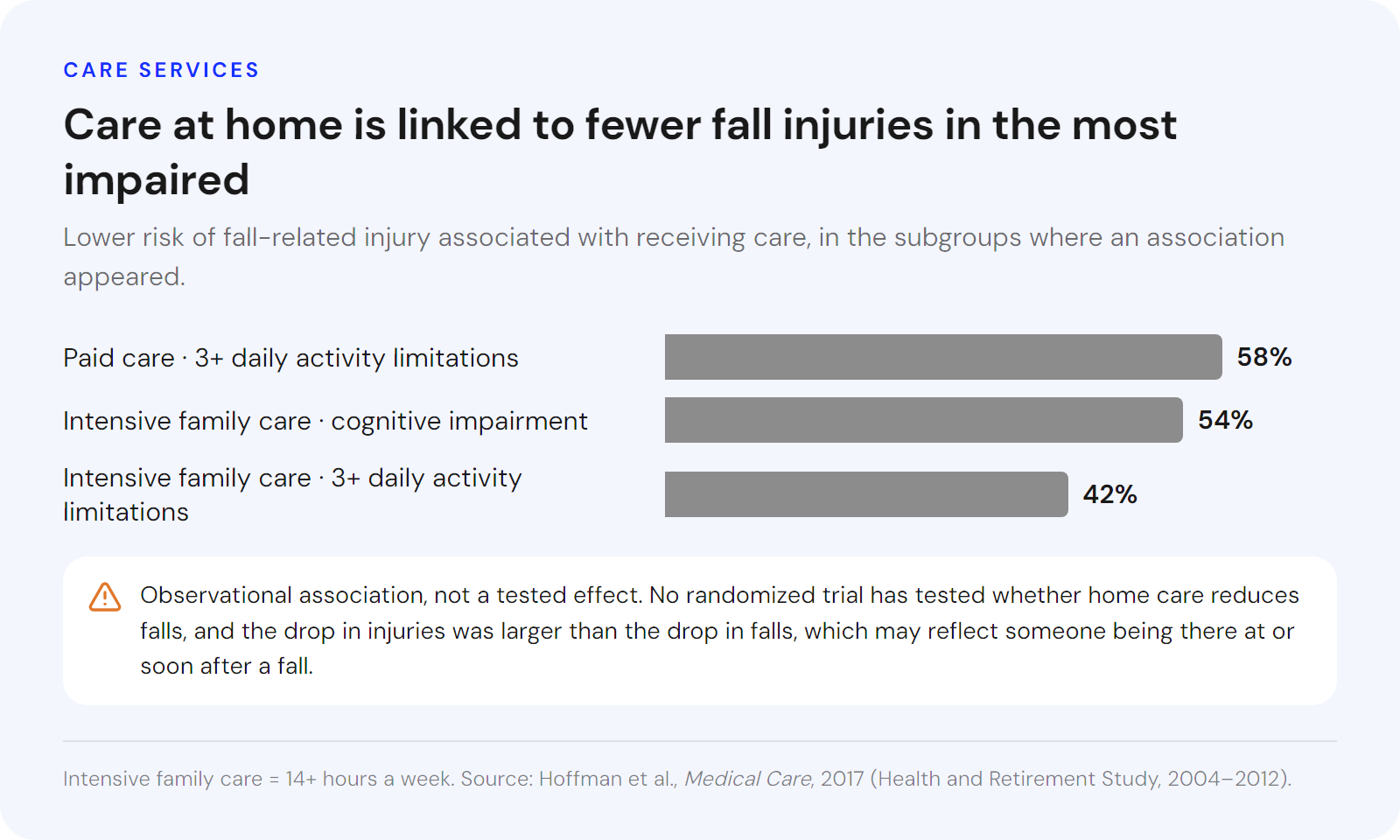
Within those subgroups the reduction in injury risk substantially exceeded the reduction in fall risk, a pattern that may reflect someone being present at or soon after a fall rather than prevention of the fall itself, although the study did not measure this. The estimates are subject to confounding in both directions: greater impairment prompts the engagement of care, while the capacity to afford care tracks other determinants of health.
Evidence: Observational cohort analysis, subject to confounding in both directions; the association is confined to specific subgroups.
Care workers delivering structured exercise
Trained community care workers can safely deliver the Lifestyle-integrated Functional Exercise program, with clients completing exercises 4.8 days per week and no serious adverse events (Burton et al., Clinical Interventions in Aging, 2018), but fall outcomes were not measured. A systematic review of 18 studies and 1,118 home care clients found no significant pooled effect on Timed Up and Go, five-times sit-to-stand or grip strength (Burton et al., Clinical Interventions in Aging, 2019); those are function measures rather than falls, and the included programs were delivered by physical therapists, nurses and occupational therapists as well as by aides, so it is not a test of the aide-delivery model. The TrEdEx trial is designed to address the question directly (Francis-Coad et al., medRxiv, 2024).
Evidence: Feasibility established; effectiveness untested. Absent evidence rather than negative evidence.
Synthesis
What can be stated with confidence is that in-home personnel are well placed to support interventions that do carry high-quality trial support, such as targeted hazard reduction and adherence to prescribed exercise. They can also help with measures that are plausible but untested as falls interventions: suitable footwear, help with transfers, and being present at high-risk moments (bathing, night-time toileting, transfers) that clinical encounters rarely see. Whether care-worker delivery itself reduces falls is not yet known.
II.VII: Education and Confidence-Building Programs

Evidence base: these programs reliably change confidence, self-efficacy and activity levels. None has been shown to reduce falls. They are worth offering on their own terms, but they should not be counted as falls interventions.
A Matter of Balance
Eight two-hour sessions delivered by trained lay coaches, built on the premise that falls are controllable. The documented outcomes (NCOA) are improved falls efficacy, improved falls management and increased activity.
A Matter of Balance explicitly targets fear of falling rather than falls. That distinction matters in both directions. Fear of falling is a genuine clinical problem: it drives activity restriction, which causes deconditioning, which raises fall risk in turn, so addressing it is worthwhile and may act on risk indirectly. But the program has not demonstrated a reduction in fall rates, and listing it alongside interventions that have implies a parity the evidence does not support. It is appropriately offered to older adults who have begun limiting their activities out of fear, not as a substitute for exercise or hazard reduction in someone at measured risk of falling.
Evidence: Documented improvements in falls efficacy, falls management and activity levels, not in fall rates.
Education delivered alone
Educational materials without accompanying assessment and modification showed no significant effect in the Cochrane synthesis, and the 2023 environmental review rated the evidence very low certainty. Information appears to change knowledge without changing outcomes.
Evidence: No significant reduction; very low certainty.
Cognitive behavioral interventions
Delivered as standalone measures, cognitive behavioral interventions did not significantly reduce falls. This is the same pattern as above, and the reason this category is kept separate from Parts II.I through II.VI.
Evidence: No significant effect on falls, notwithstanding demonstrated benefit for fear of falling.
II.VIII: Injury Mitigation and Monitoring Technology

Evidence base: these measures accept that falls will occur and target the consequences. For community-dwelling older adults the evidence is negative or absent; the category is included so that it is not mistaken for prevention.
Hip protectors
In nursing care settings, 14 studies and 11,808 participants (Santesso et al., Cochrane Database of Systematic Reviews, 2014) showed a small reduction in hip fracture risk (RR 0.82, 95% CI 0.67–1.00), about 11 fewer fractures per 1,000. In community settings, five studies and 5,614 participants showed no effect (RR 1.15, 95% CI 0.84–1.58). Acceptance and adherence are the principal barriers. For community-dwelling older adults, hip protectors are not supported.
Evidence: Moderate certainty of a small benefit in nursing care; moderate certainty of no benefit at home.
Bone health management
Osteoporosis assessment and treatment reduce fracture risk without reducing falls. Given that falls cause 83% of hip fracture deaths (CDC, 2026), this belongs in a comprehensive program, as a parallel track rather than a substitute for fall reduction.
Evidence: Established fracture-prevention evidence; no effect on falls.
Fall-detection technology and wearables
Devices that summon help after a fall shorten time to assistance, which matters for outcomes after a long lie. They have not been shown to prevent the fall itself. Their role is complementary to the interventions in Parts II.I to II.VI, not a substitute for them.
Evidence: The evidence concerns detection accuracy and risk prediction, not fall reduction.
II.IX: Screening and Identification

Many findings in this review are moderated by baseline risk. Home modification works in high-risk populations and not in unselected ones. Cataract surgery, podiatry and pacing work in the specific conditions they address. Paid care shows association with reduced injury only among the most impaired. Exercise is the exception: it reduces falls across risk levels, so its benefit does not depend on prior screening in the same way.
Systematic identification is therefore a component of the intervention program rather than a preliminary to it. The CDC's STEADI initiative (CDC, 2025) provides a widely used, guideline-endorsed screening and management algorithm for primary care; updates have been proposed in recommendations from an American Geriatrics Society workgroup (Johnson et al., Journal of the American Geriatrics Society, 2025). The 2022 World Falls Guidelines (Montero-Odasso et al., Age and Ageing, 2022) establish the international standard for risk stratification and response.
Evidence: Widely used, guideline-endorsed instruments with moderate predictive accuracy. Screening is not itself an intervention, but nearly every intervention above depends on it.
Part III: Implications for Practice
The evidence supports a sequenced approach:
- Screen systematically and repeatedly. Risk status is dynamic, changing with each new medication, hospitalization and seasonal transition.
- Stratify before intervening. Home hazard reduction cut falls by 38% in people at higher risk but showed no clear benefit when offered to everyone.
- Assess by task rather than by room. Direct observation of the shower transfer, the sit-to-stand and the nocturnal toileting route yields information that room-level checklists do not.
- Refer to physical therapy for a balance-challenging prescription of more than three hours a week, with a maintenance plan beyond the initial episode of care.
- Review medications, with particular attention to psychotropics.
- Address the treatable specifics (cataract, foot pain, orthostatic hypotension, nocturia) that carry their own indicated interventions.
- Combine modification with training. Equipment is more likely to be used, and used safely, when people are shown how to use it.
- Re-screen. Track trends over time to spot decline early.
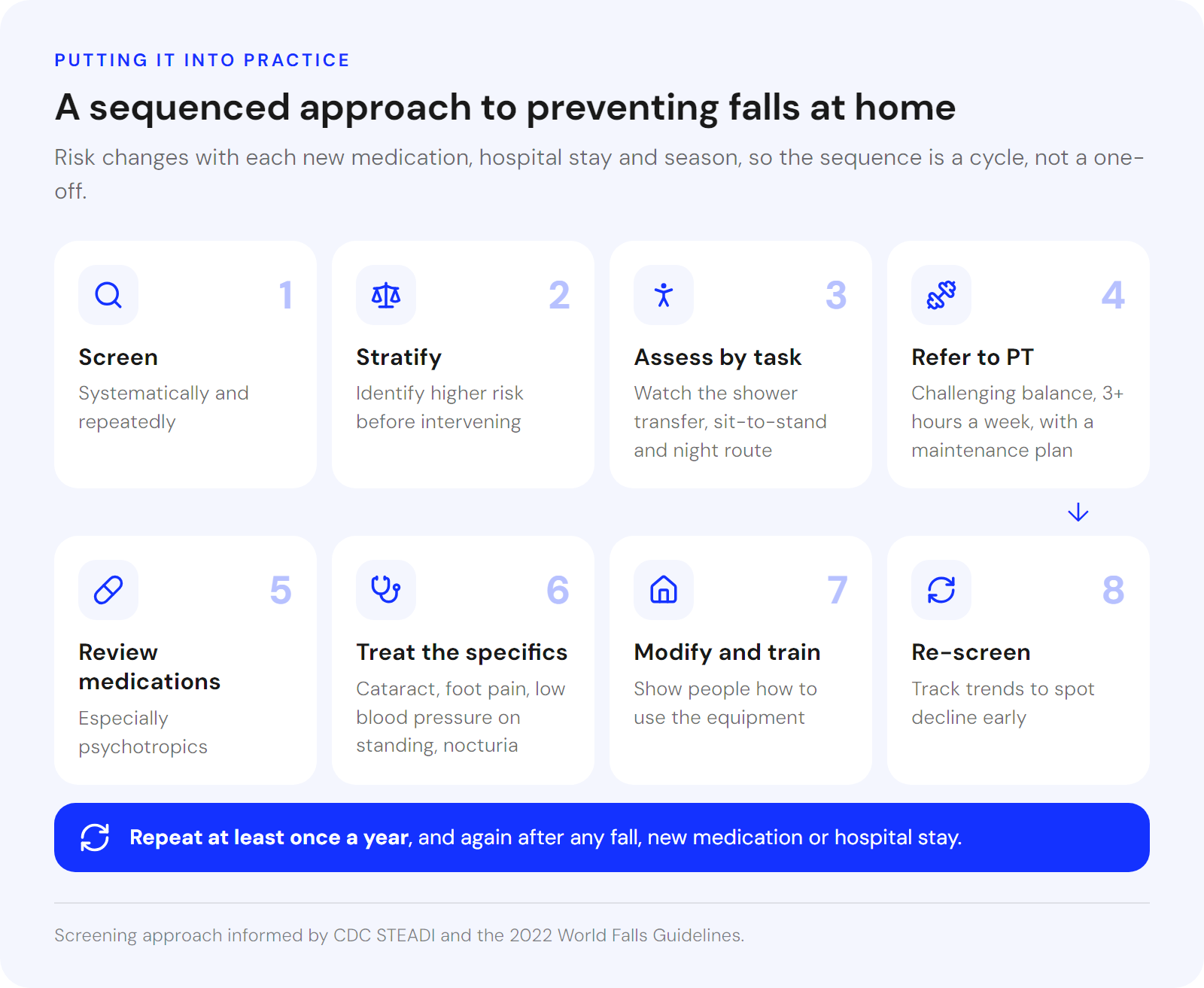
The evidence regarding effective intervention is, by the standards of the field, unusually clear. The persistent gap lies in identification, which argues for checking fall risk at least once a year, as STEADI and the World Falls Guidelines recommend, and again after any fall, new medication or hospital stay.