

The NOI equation: falls equal turnover equal lost revenue
In a rental model, every fall-related move-out is lost monthly revenue. The unit sits empty during turnover. Liability claims add legal costs. The maths is simple: fewer falls means higher occupancy and stronger NOI.
Most rental portfolios have no standardized falls screening. Each campus handles risk differently, if at all. Corporate has no consistent data to benchmark performance across communities.
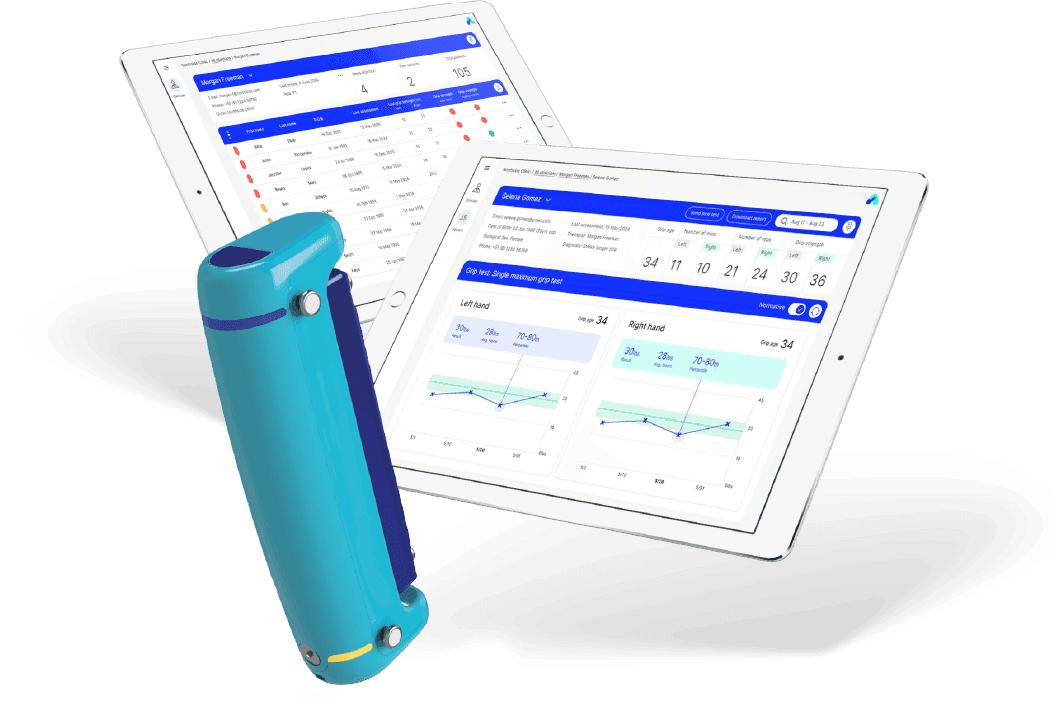
Able Assess deploys portfolio-wide with minimal training. Non-clinical staff run a five-minute screening per resident. Corporate gets standardized, comparable data from every campus.
How it works across your portfolio
Deploy portfolio-wide
Roll out across every campus in 30 days. A Bluetooth sensor and any tablet per community. 15 minutes of staff training.
Screen every resident
Non-clinical staff run a five-minute assessment during routine wellness checks. Four validated metrics per session.
Intervene before the fall
Risk banding identifies declining residents early. Targeted interventions begin before a fall triggers a move-out or a claim.
Report to corporate
Standardized data across every campus gives regional and corporate leadership a single view of fall risk and program performance.
Four metrics that protect NOI
Grip strength
Sit-to-stand
Gait speed
Timed Up and Go
Every campus uses the same hardware, the same metrics and the same workflow. Corporate can compare fall risk data across communities, identify underperforming campuses and measure the impact of interventions at scale.
What is one empty unit costing you per month?
Falls-related turnover is one of the largest controllable costs in a rental portfolio. Model the impact of a 25% reduction in falls across your communities.
From the people using it
We saw fewer falls and shorter vacancy periods within the first two quarters. The financial case was straightforward.
For the first time, we can compare fall risk data across every community in the region. That changed how we allocate resources.